
Bali Tropical Modern
Balinese Architectural Style
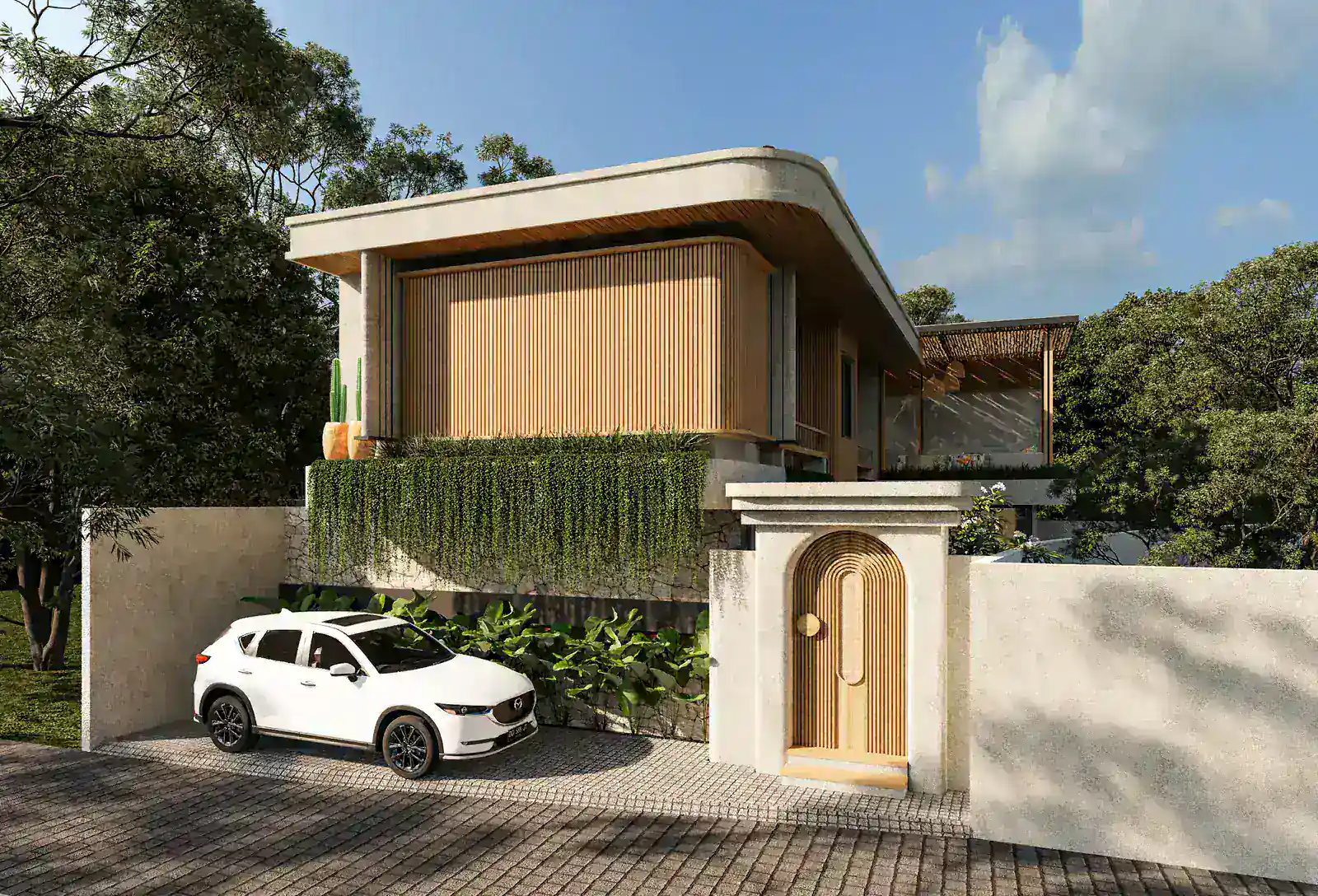
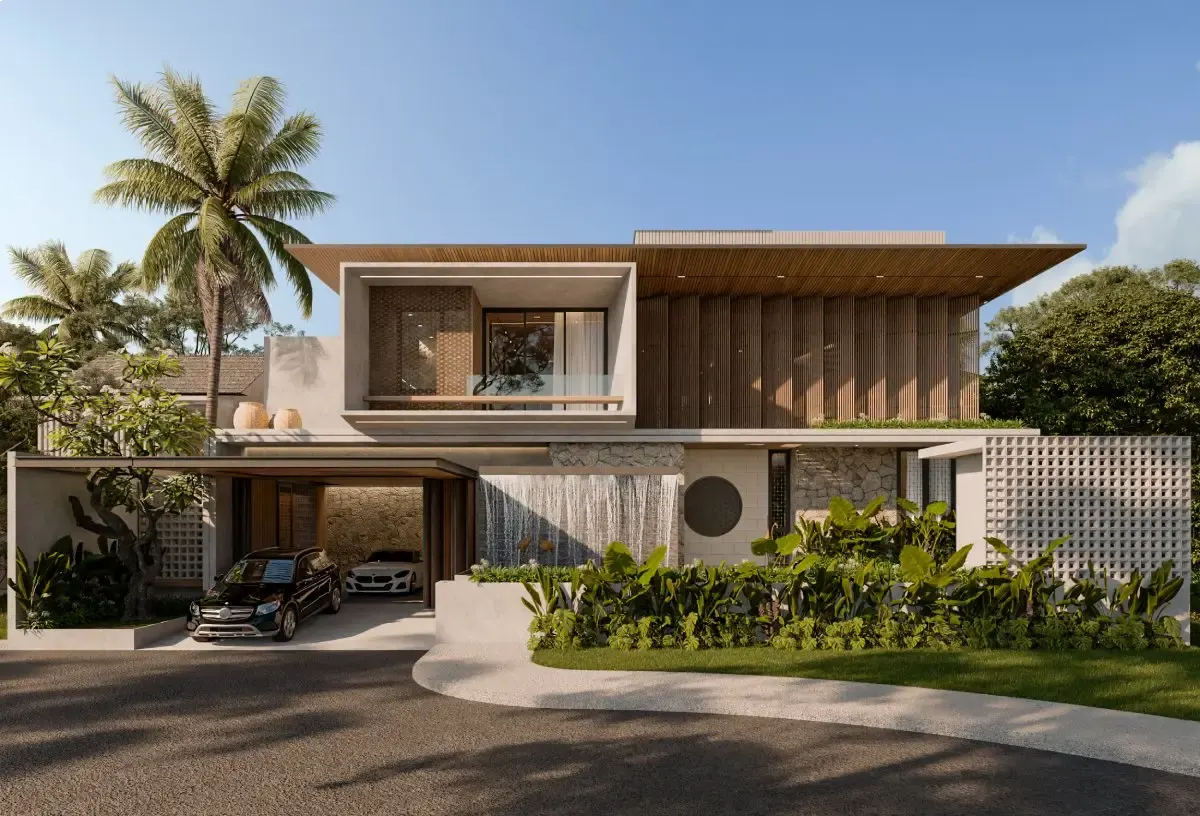
A reinterpretation of Balinese essence through tropical modern architecture. Not a copy of tradition, but its evolution.
5 Principles of Bali Tropical Modern
Tri Hita Karana Philosophy
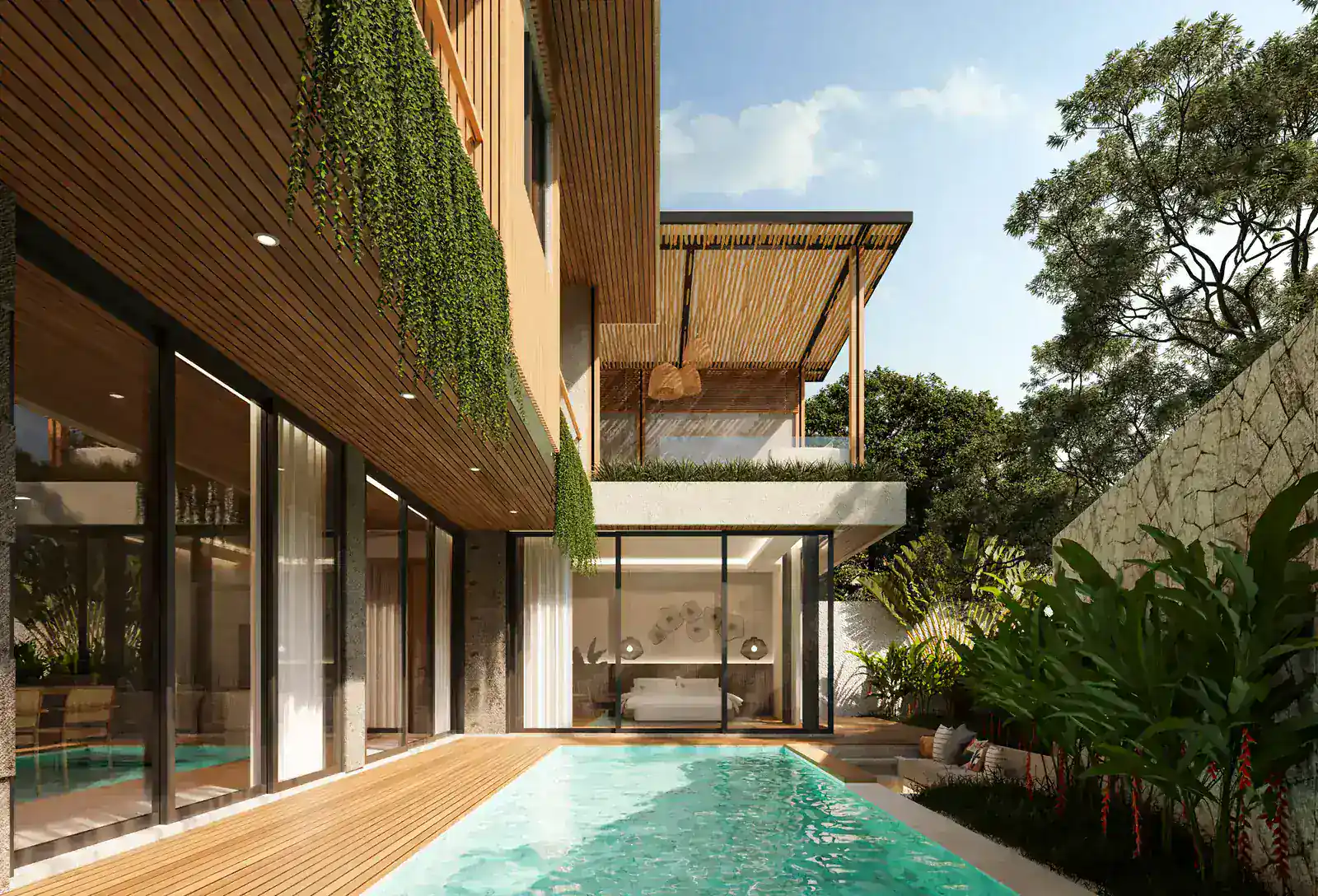
Every design begins with the Balinese philosophy of three harmonies: with God (Parahyangan), with people (Pawongan), and with nature (Palemahan). This determines spatial hierarchy, orientation, and the relationship between built form and landscape.
Spatial Flow and Pavilion Massing
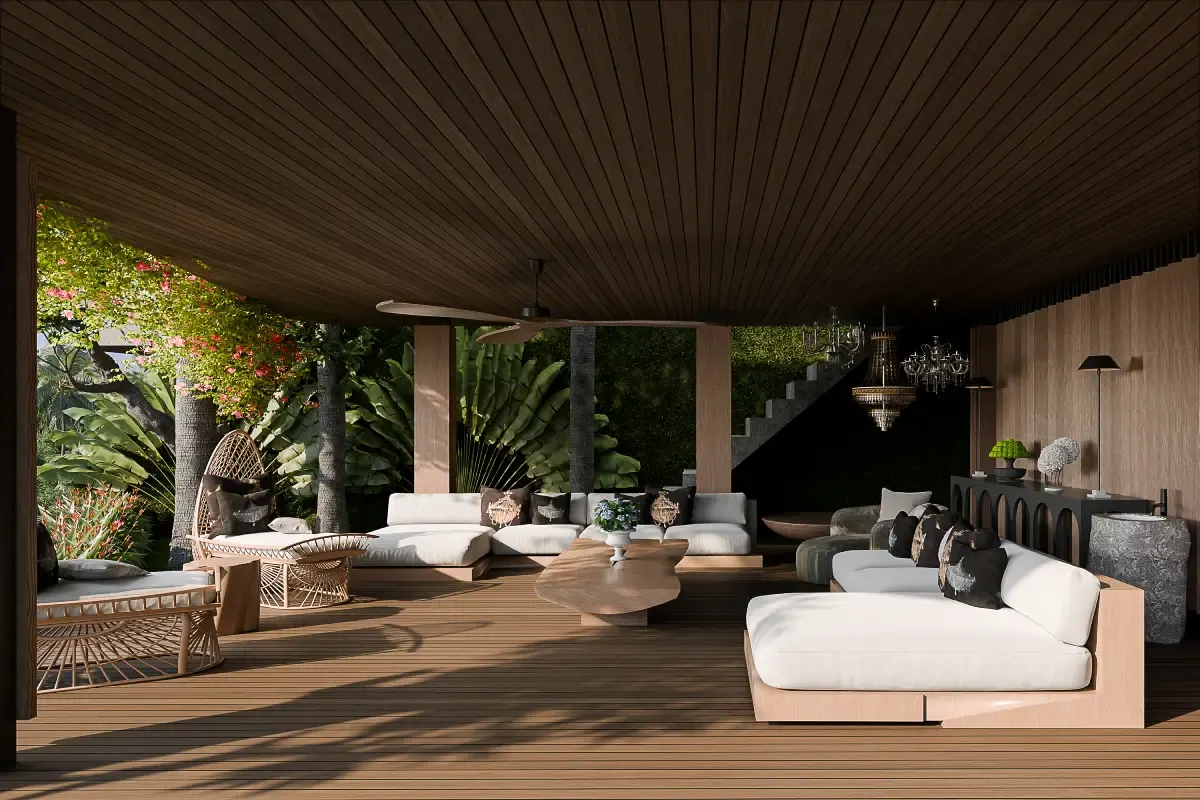
Spaces are layered from public to private through courtyards, thresholds, and transitional zones. Buildings are split into separate pavilion volumes, creating natural ventilation, intimate outdoor rooms, and a seamless indoor-outdoor connection.
Natural Materials, Honest Texture
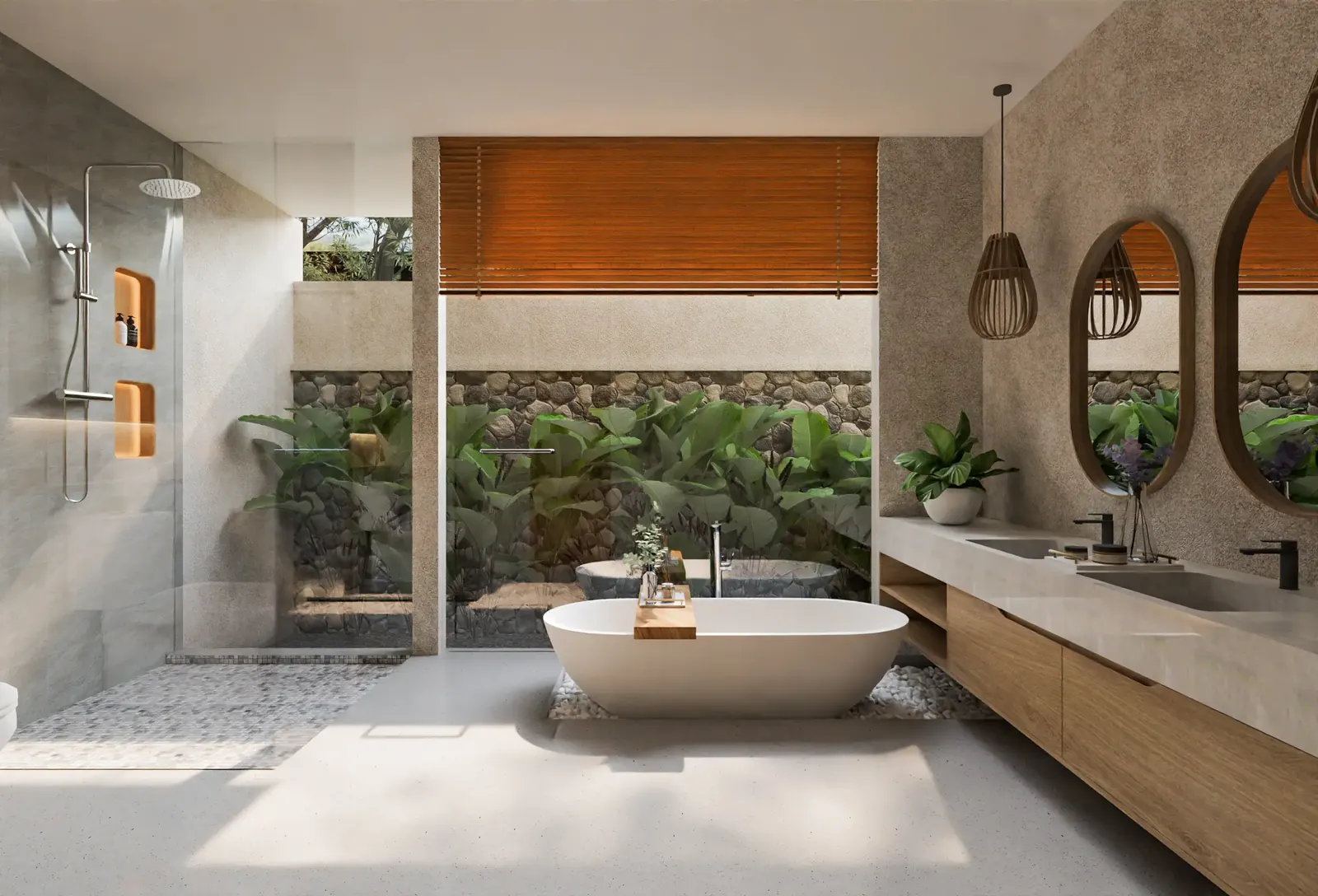
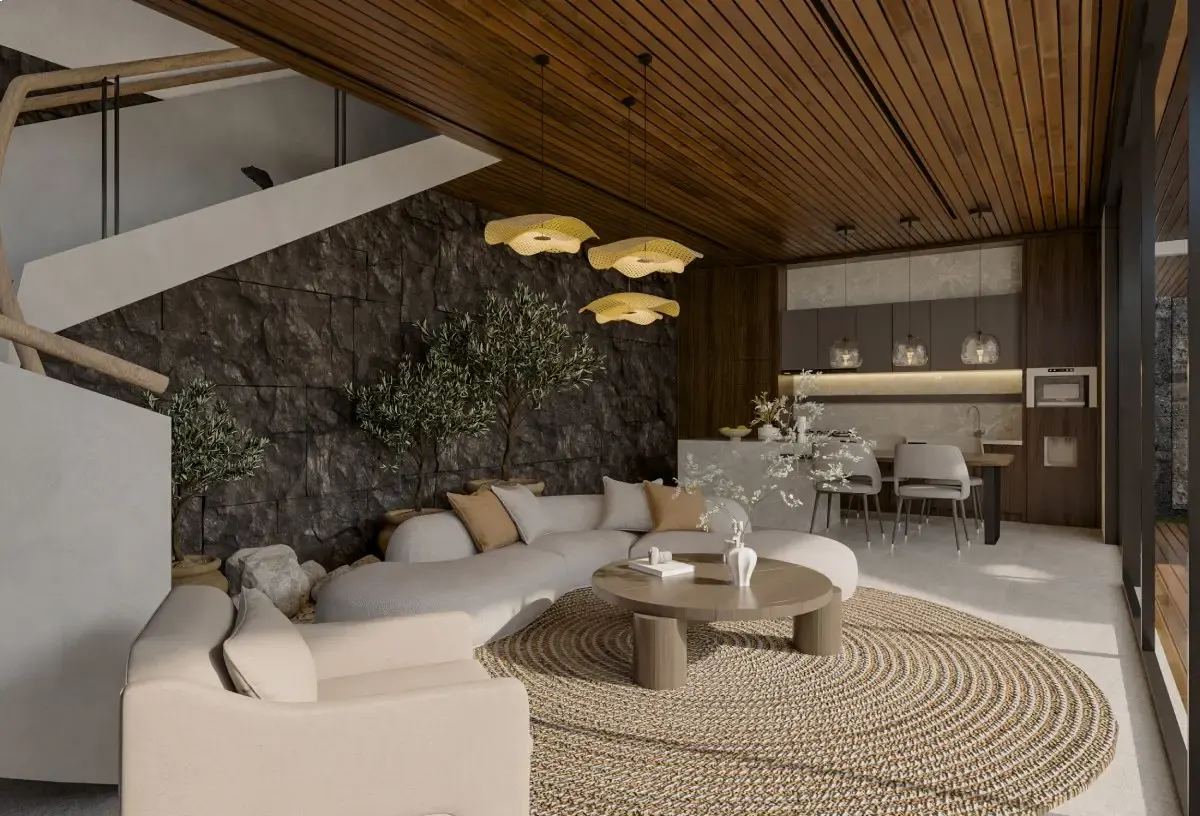
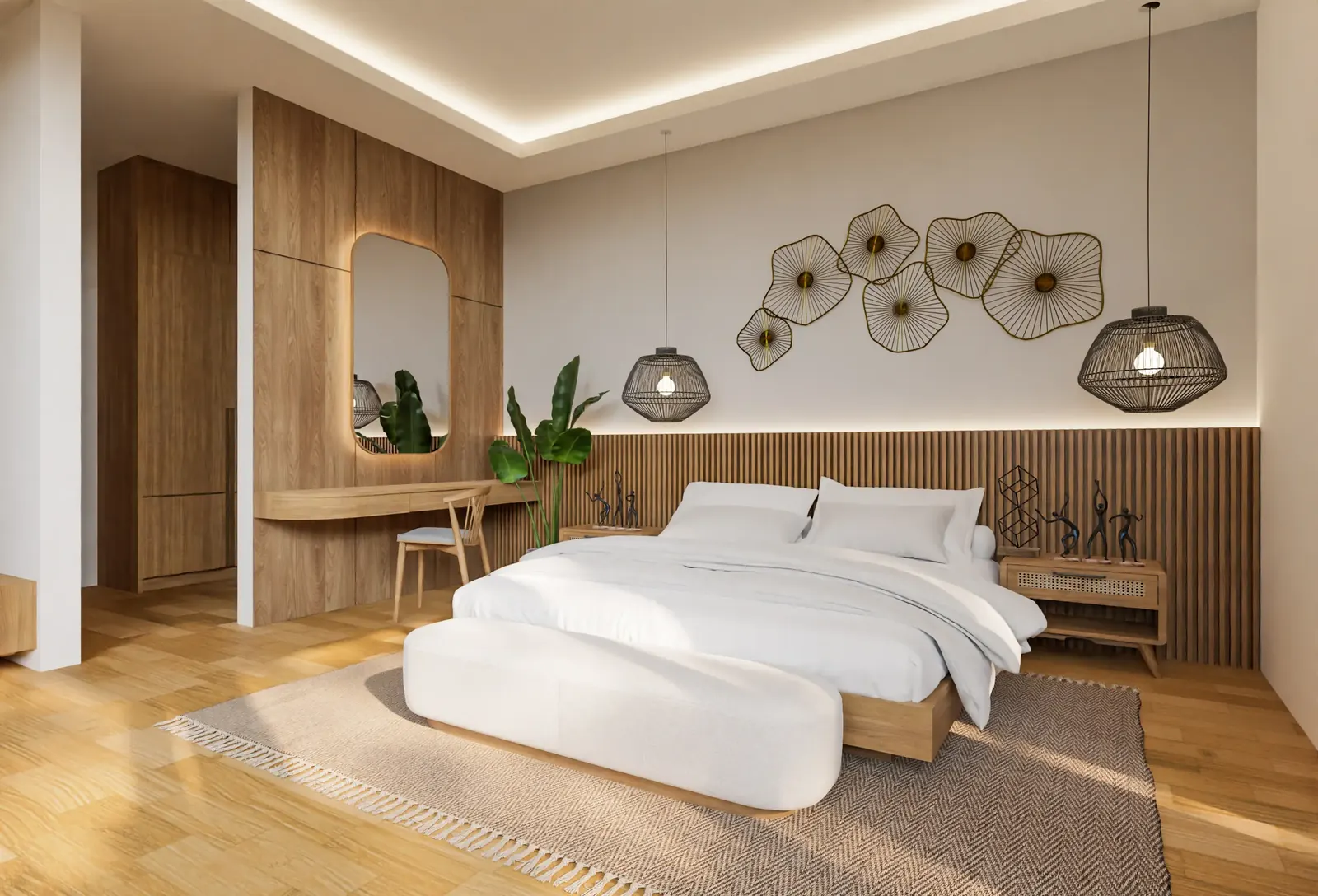
Bamboo, wood, and stone used with an experimental, modern approach. No literal ornament or decorative carving. Balinese identity is expressed through material texture, proportion, and earth-tone palettes rather than applied decoration.
Tropical Climate Response
Sun screens, deep overhangs, cross ventilation, and large openings are functional responses to the tropical climate. Every design decision considers heat, rain, and light before aesthetics.
Landscape as Architecture
Water elements, gardens, and tropical planting are not decoration but the center of the design. Landscape and building work as a single integrated system, with nature shaping the spatial experience from entry to courtyard.
Bali style translated into tropical modern. Harmony with nature, flow of space, and tranquility.
Lumbung Architect's Balinese Style is not pure traditional Bali. It is a reinterpretation of Balinese essence combined with tropical modern thinking. We respond to site, climate, terrain, and surrounding culture to create architecture that feels Balinese without copying ornament.
How We Work
Contextual Response
Each project begins with the site. We respond to tropical climate, terrain contour, and surrounding culture. No template applied.
Spatial Experience
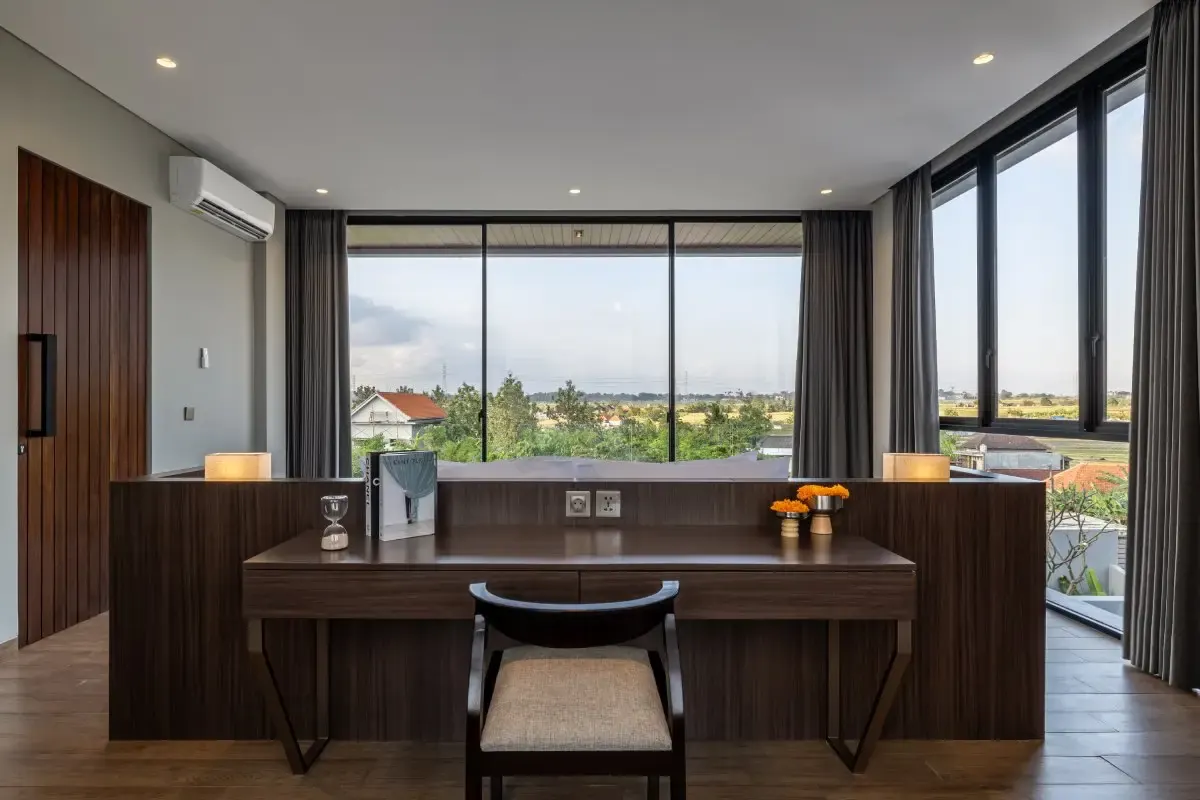
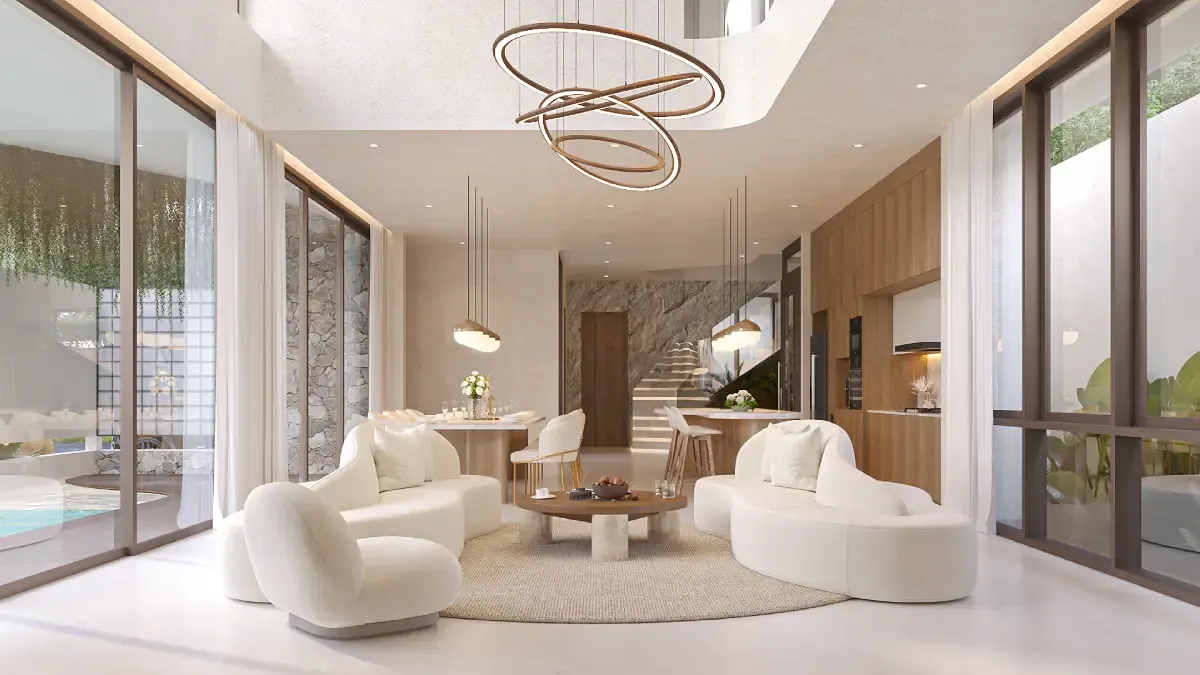
Room transitions, natural light, and the indoor-outdoor relationship are designed as a journey through space.
Material Integrity
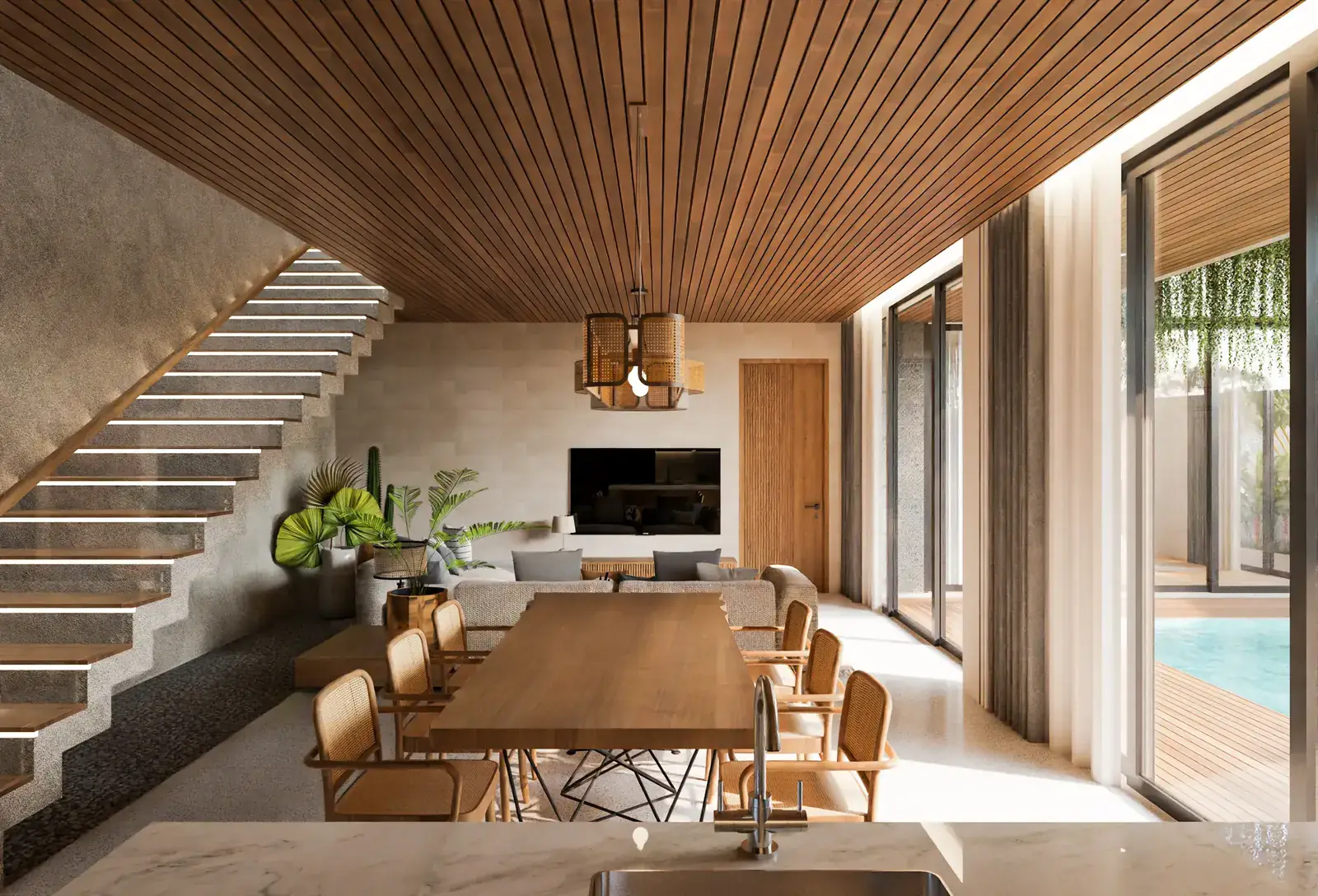
Bamboo, wood, and stone selected for structural performance and aging quality. Experimental and modern, never purely decorative.
Design Studies
Feedback
"They understood the vision for Casa Infinito and executed it with precision and attention to detail."

"Consistent quality across all 7 villas. Strong understanding of Balinese architectural language."

"Djelantik House balances modern functionality with traditional Balinese design sensibility."

Frequently Asked Questions
What makes Lumbung's Balinese Style different from traditional Bali architecture?
We reinterpret the essence of Balinese design, not copy it. Our approach translates Tri Hita Karana philosophy, spatial layering, and material culture into tropical modern architecture. The result feels Balinese through proportion and spatial quality, not through ornamental decoration.
What is the typical cost range for a Balinese-style villa?
Construction costs vary by size, materials, and finishing level. Typical range is $450–$750 per square meter, with design fees separate. Detailed estimates are provided during the schematic design phase.
Does Lumbung Architect work with international clients?
Yes. The firm handles international projects with full project management, English communication, and local permit processing. We have completed projects in Indonesia, Nigeria, and the Bahamas.
What is Tri Hita Karana and how does it influence your designs?
Tri Hita Karana is a Balinese philosophy meaning "three causes of well-being": harmony with God (Parahyangan), harmony with people (Pawongan), and harmony with nature (Palemahan). It determines spatial hierarchy, orientation, and the integration of landscape, community spaces, and spiritual areas in every project.
What is the typical project timeline?
The design phase typically takes 4-6 months, shaped by the scope of the project and the natural rhythm of client collaboration throughout the design journey. Detailed timelines are established during the schematic design stage to ensure clarity at every step.