Most buildings in Bali respond to the heat in one way: install air conditioning and adjust the thermostat. That is an understandable response, but it bypasses a more fundamental question: can the building itself be designed to run cooler before the AC switches on?
In the design of Krea House in Sanur, that question is answered with terracotta evaporative cooling, a system drawn from traditional practice and positioned precisely within the building plan.
What Is the Principle Behind Evaporative Cooling?
Evaporative cooling uses the physics of evaporation. Water soaks into the pores of terracotta and evaporates from its surface, drawing heat from the surrounding air. The air passing over the clay becomes cooler without any mechanical energy. Traditional buildings from North Africa to Southeast Asia have long used this principle in various forms.
Terracotta is a porous material. When water is introduced to its surface, it is absorbed into the network of small pores within the clay. As that water evaporates, it draws heat from the surrounding air. The result is a local drop in air temperature that requires no mechanical energy.
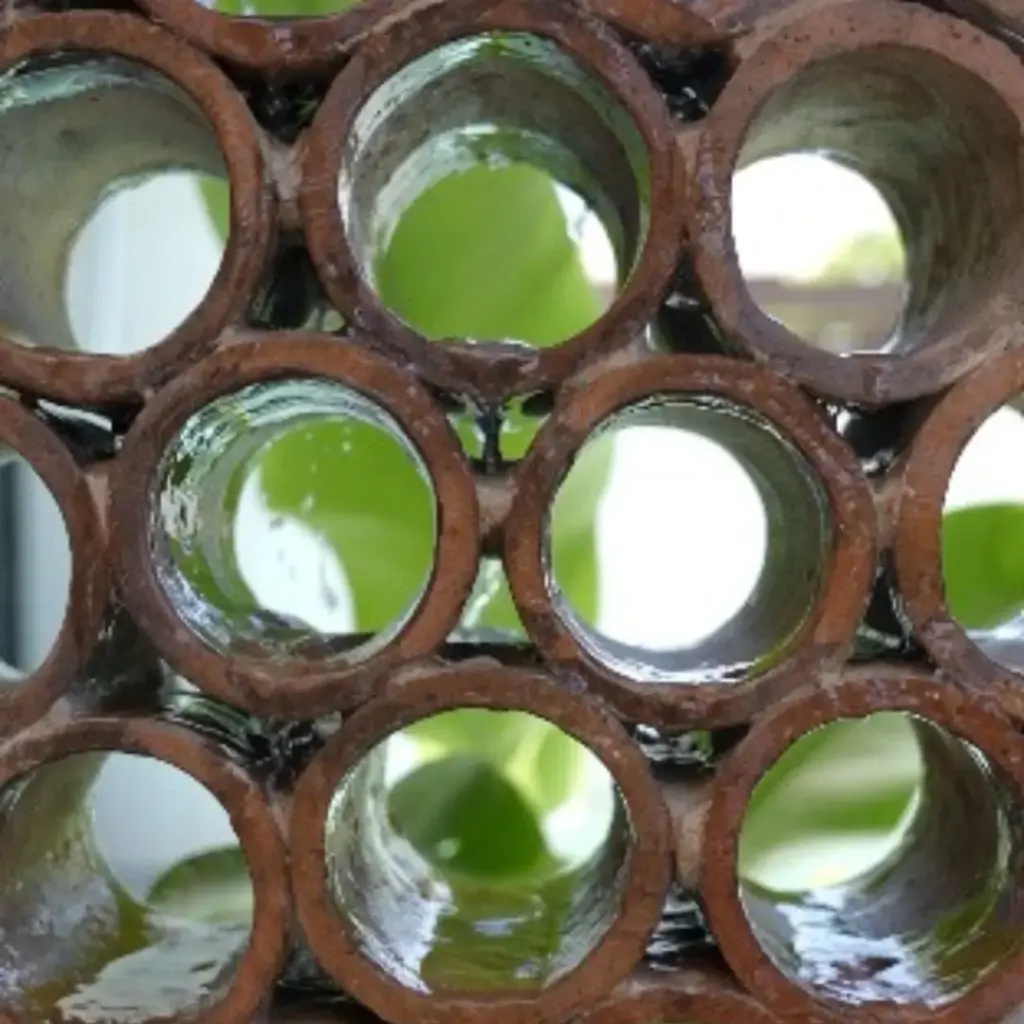
The principle is not new. It has been used in various forms in traditional buildings across hot regions, from North Africa to Southeast Asia. What is different at Krea House is the precision with which it is integrated into a contemporary building.
Where Should Terracotta Cooling Modules Be Placed?
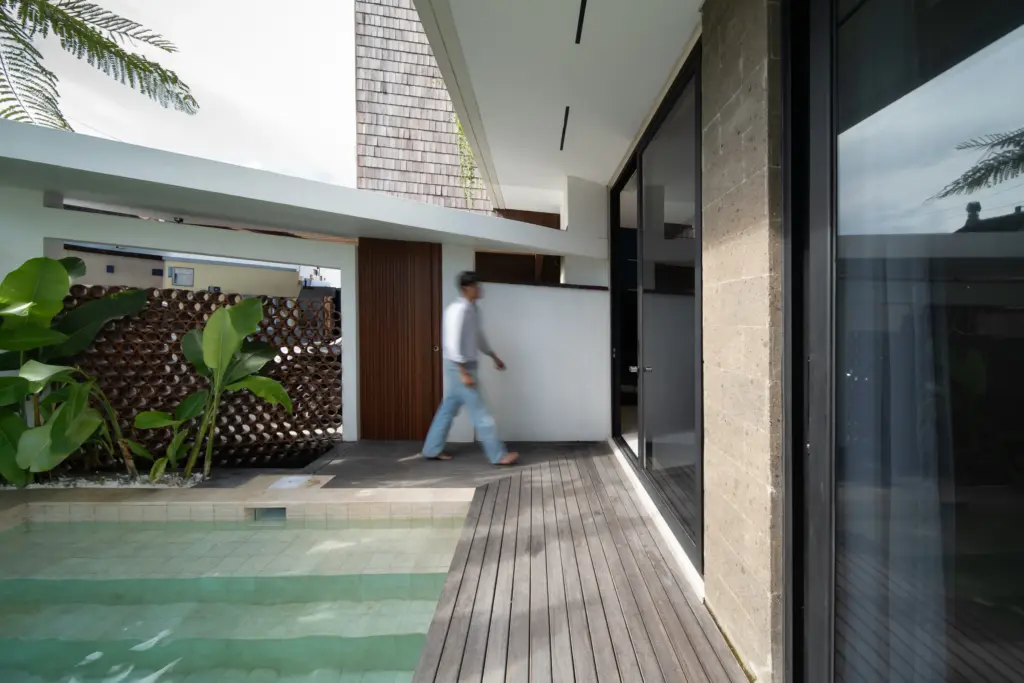
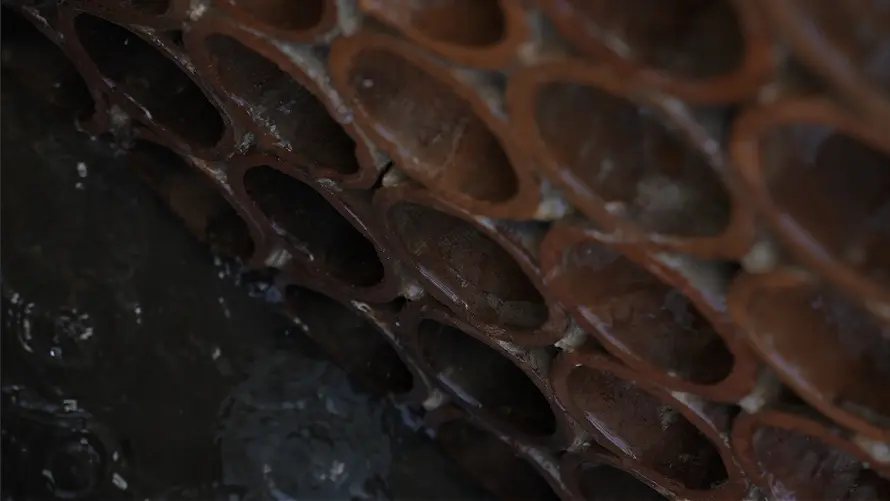
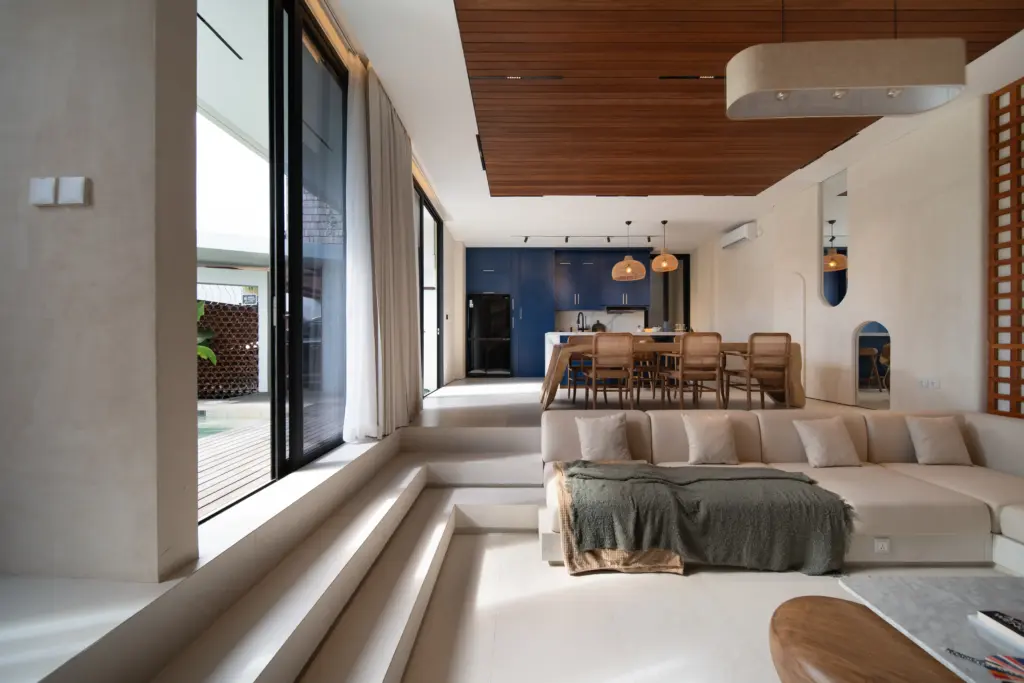
Place them where outside air enters the building. At Krea House, the terracotta modules line the transition hallway between the main entry and the living and dining areas. Incoming air is cooled there first, then cross-ventilation carries it into the main rooms, without fans, a compressor or electricity.
The terracotta modules are placed along the transition hallway, the connecting passage between the main entry and the living and dining areas. That placement is not incidental.
The transition hallway is where outside air enters the building. With the cooling system here, air passes through the evaporative process before it reaches the main living spaces. Anyone walking into the house is meant to feel the temperature drop as they arrive.
The cooled air then flows into the living and dining areas through the pressure difference created by the building's cross-ventilation: without fans, without a compressor, without electricity.
“A well-designed building should work with its climate before depending on mechanical systems.”
— Lumbung Architect
Can Terracotta Cooling Replace Air Conditioning?
Not entirely. In Bali's wet season, very high humidity slows evaporation and reduces the cooling effect. The system is designed to complement air conditioning by reducing the hours it is genuinely needed, especially in the morning and late afternoon, so the building does part of the cooling work before mechanical systems switch on.
The terracotta system at Krea House is not a total replacement for air conditioning. In Bali's wet season, very high humidity reduces how well evaporative cooling works.
It is designed instead to reduce the hours when AC is genuinely needed, particularly in the morning and late afternoon, when temperatures are still within a range that passive strategies can manage.
More than that, it reflects a design position: a well-designed building should work with its climate before depending on mechanical systems. As building energy use becomes an increasingly serious concern, this approach is not vernacular romanticism. It is architecture that makes sense.
Krea House at a glance
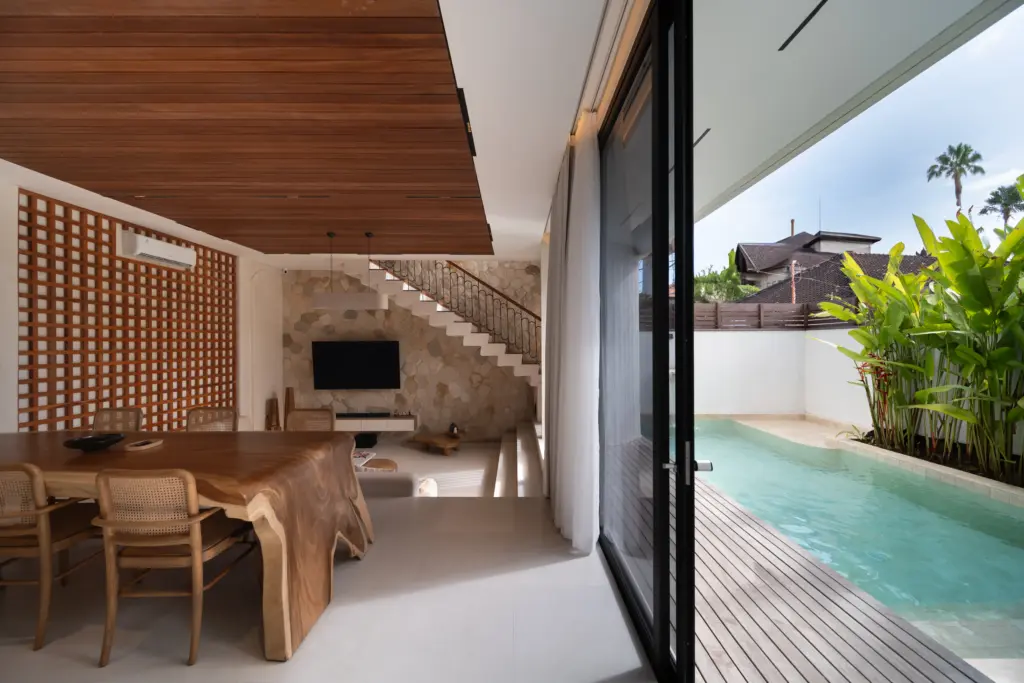
Location | Sanur, Bali, Indonesia |
Type | Private residence, occupied by its owners |
Site | 150 m² |
Programme | 3 bedrooms, 2 storeys; communal ground floor with pool, living, dining and kitchen |
Key strategies | Ulin sirap facade · terracotta evaporative cooling · purposeful layout |
Architect | Lumbung Architect (2025) |
Frequently asked questions
Terracotta evaporative cooling works best when it is placed where outside air enters the house and paired with cross-ventilation. It will not replace air conditioning in Bali's wet season, but it lets the building do part of the cooling first. To discuss passive design for your project, contact the Lumbung Architect team at info@lumbungarchitect.com.
About Lumbung Architect
Lumbung Architect is an architecture firm rooted in Bali tropical modern architecture, with offices in Bali, Jakarta and Thailand. Its work spans private residences, villas, resorts and interiors. Tagline: A Journey in Every Design.
Sources
- Krea House project description
- Physical principle of evaporative (latent heat) cooling; effectiveness decreases as relative humidity rises