There are a number of materials that perform well in a tropical climate. Few of them perform better as they age. Ulin timber is one of the rare exceptions.
In the design of Krea House in Sanur, Ulin sirap, a material more commonly associated with traditional roofing, clads the entire building exterior. The decision is not primarily aesthetic. It is grounded in the material's own performance.
Ulin sirap are thin, overlapping shingles cut from Ulin (Eusideroxylon zwageri), a hardwood native to Borneo and Sumatra, also known as Borneo ironwood.
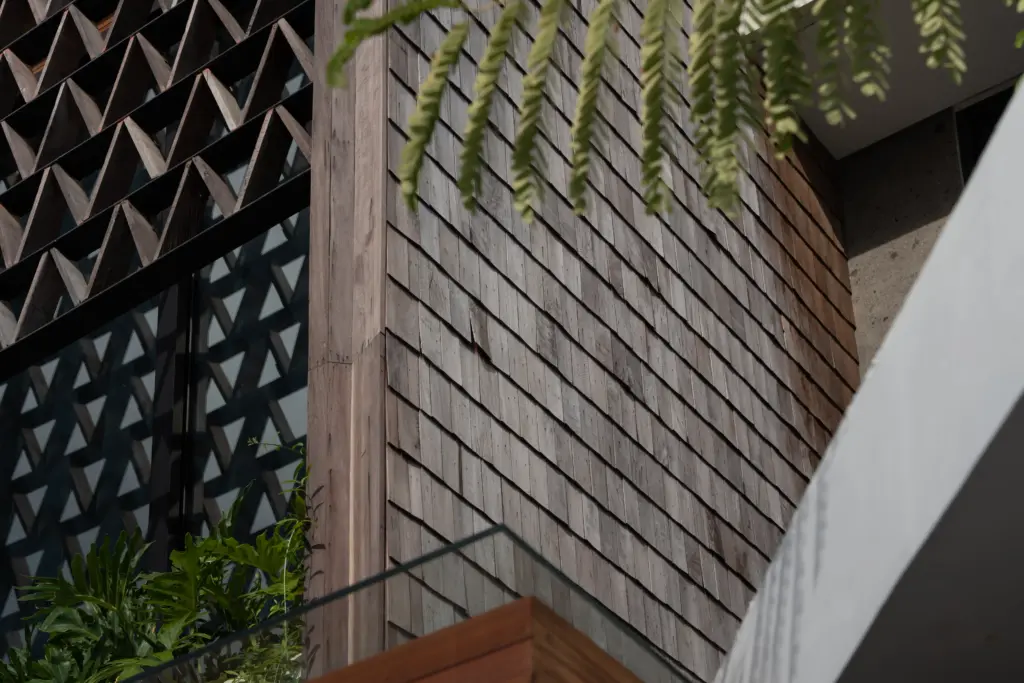
Why Does Ulin Work Well on a Tropical Exterior?
Ulin is one of Indonesia's densest hardwoods, so it resists termites and decay naturally without chemical treatment. It stays stable in Bali's heat and humidity, where many imported materials degrade within a few years, and as timber it conducts far less heat into the rooms than masonry or metal walls.
Ulin is one of the densest hardwoods produced in Indonesia. That density gives it natural resistance to termites and decay without chemical treatment. In a climate as humid and warm as Bali's, where many imported materials begin to degrade within their first few years, Ulin remains stable.
Like other timber, Ulin conducts heat far less than masonry or metal. The exterior wall therefore does not become a strong source of radiant heat into the rooms during the afternoon. For a home that also relies on passive cooling, this is a relevant quality.
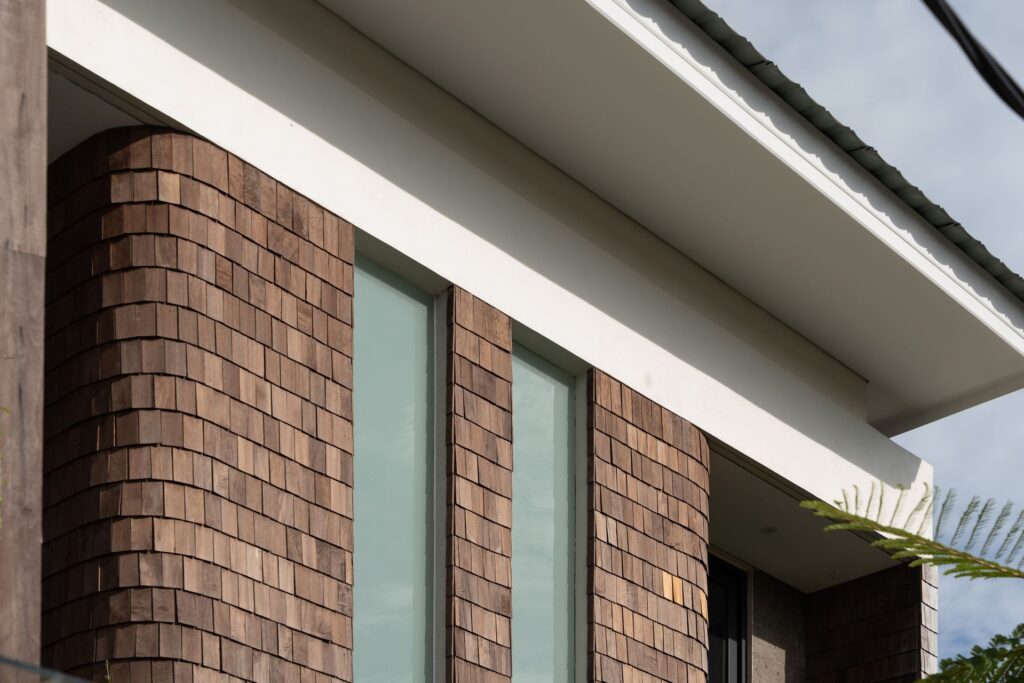
Does Ulin Turn Grey, and Is That Damage?
Yes, ulin turns grey, but it is not damage. Sun and rain gradually shift the surface from warm reddish-brown to silver-grey. This patina affects only the surface, not the structure. The Krea House facade was designed with this in mind: its best appearance may come years after completion, not on handover day.
When first installed, Ulin is a warm reddish-brown. Over time, sun and rain gradually move the surface toward a quiet silver-grey. That process is not degradation. It is maturation.
The grey patina of aged Ulin has a visual depth that no paint or synthetic finish can replicate. The facade of Krea House is designed with the understanding that its best appearance may not be on the day of completion.
In a context where many Bali villas choose materials that look perfect at handover but fade quickly, this approach reflects a different priority: building for the long term, not for the first photograph.
Why Use a Roofing Shingle as a Facade?
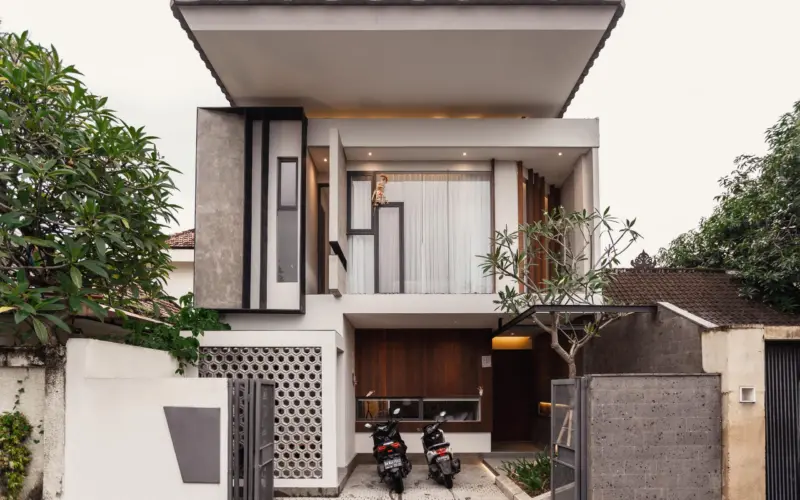
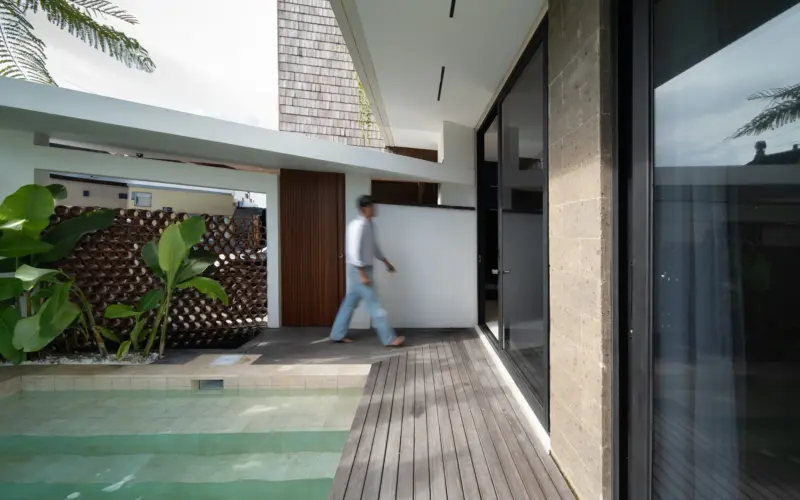
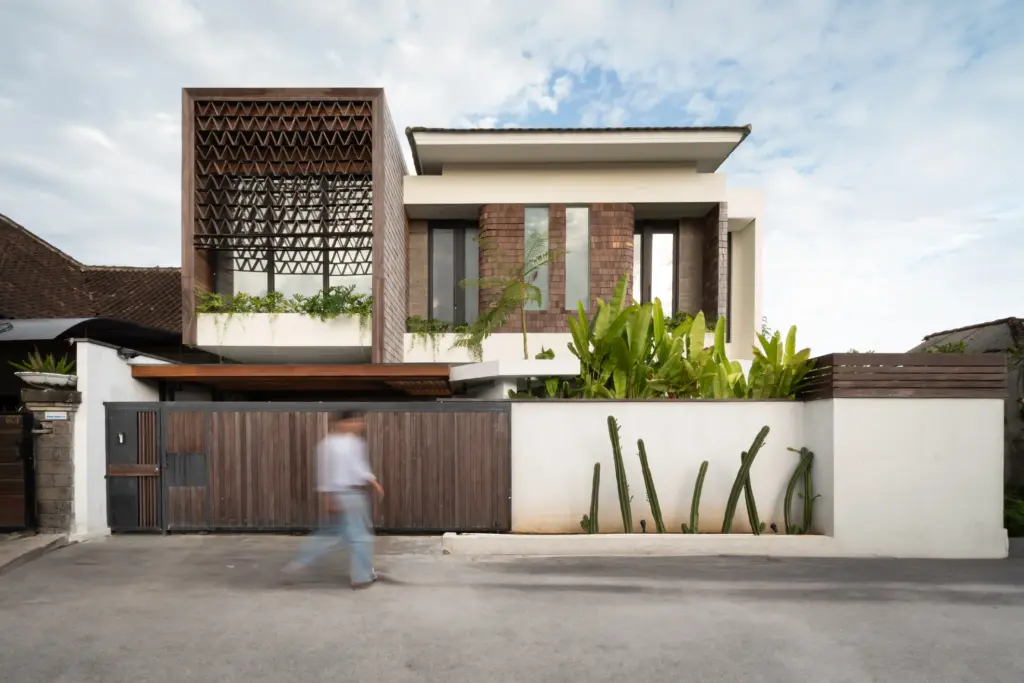
Sirap is traditionally a roofing material: lightweight, layered and water-resistant. Krea House applies the same logic to the walls. Overlapping ulin shingles shed rain and create an exterior skin with texture, shadow and depth that flat panels cannot match, linking the house to local material tradition in a contemporary architectural language.
Using Ulin sirap as a facade is an unconventional decision. Traditionally, sirap is a roofing material: lightweight, layered, and water-resistant. At Krea House, the same logic is applied to the wall. Layer upon layer of Ulin forms an exterior skin with a texture and depth that a flat panel system cannot produce.
The result is a building that feels rooted in local material tradition while being expressed in a fully contemporary architectural language.
“Build for the long term, not for the first photograph.”
— Lumbung Architect
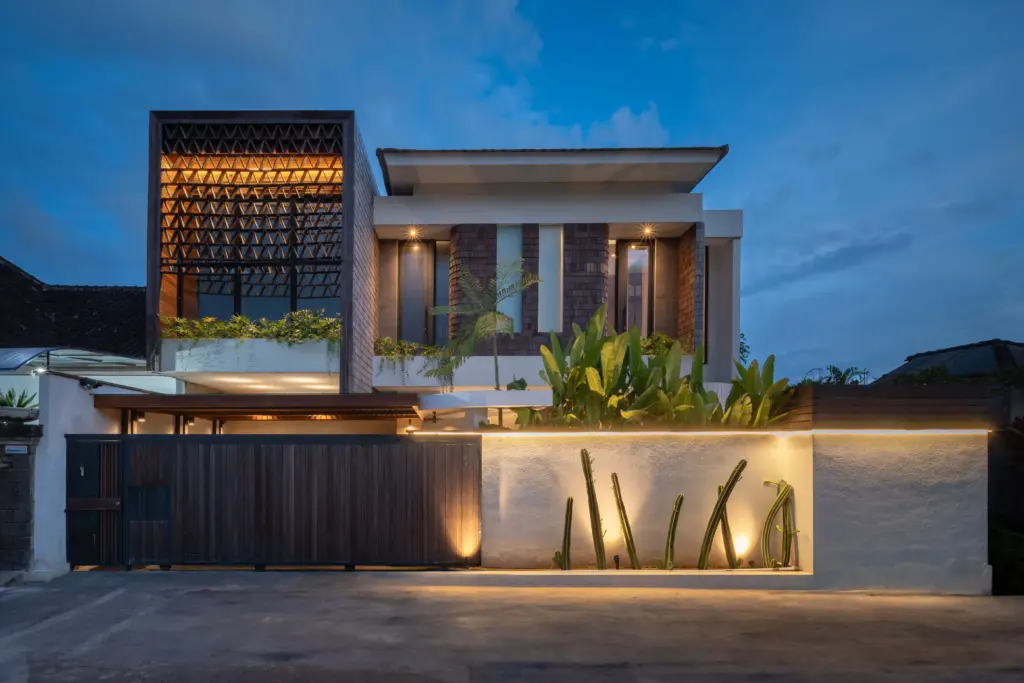
Krea House at a glance
Location | Sanur, Bali, Indonesia |
Type | Private residence, occupied by its owners |
Site | 150 m² |
Programme | 3 bedrooms, 2 storeys; communal ground floor with pool, living, dining and kitchen |
Key strategies | Ulin sirap facade · terracotta evaporative cooling · purposeful layout |
Architect | Lumbung Architect (2025) |
Frequently asked questions
Is Ulin wood suitable for exterior facades in Bali?
Yes. Ulin, or Borneo ironwood, is a very dense Indonesian hardwood with high natural durability. It resists termites and decay without chemical treatment and stays stable in hot, humid climates like Bali, where many other facade materials degrade within a few years.
Why does Ulin turn grey over time?
Sunlight and rain slowly break down the outer surface of the wood and wash out its natural extractives, so the colour shifts from reddish-brown to silver-grey. This is a surface patina, not structural decay. A UV-protective oil can slow the change, but it needs regular reapplication.
Is Ulin a responsible material choice?
Ulin grows slowly and is listed as Vulnerable on the IUCN Red List, so sourcing matters. Choose timber with verified legal origin under Indonesia's SVLK system, or reclaimed Ulin, and use it where its durability adds real value, such as exposed facades.
Ulin sirap shows how a traditional roofing material can become a durable, natural building skin for a tropical home: dense enough to resist termites without chemicals, and honest enough to age into a silver-grey patina. To discuss materials for your own project, contact the Lumbung Architect team at info@lumbungarchitect.com.
Read next:
- Terracotta Evaporative Cooling: Passive Cooling for Tropical Climates
- Ideas to Try on Modern Tropical Bali Buildings
About Lumbung Architect
Lumbung Architect is an architecture firm rooted in Bali tropical modern architecture, with offices in Bali, Jakarta and Thailand. Its work spans private residences, villas, resorts and interiors. Tagline: A Journey in Every Design.
Sources
- Krea House project description
- IUCN Red List of Threatened Species: Eusideroxylon zwageri (Vulnerable)
- Indonesia timber legality and sustainability verification system (SVLK), Ministry of Environment and Forestry