There are a number of materials that perform well in a tropical climate. Few of them perform better as they age. Ulin timber is one of the rare exceptions.
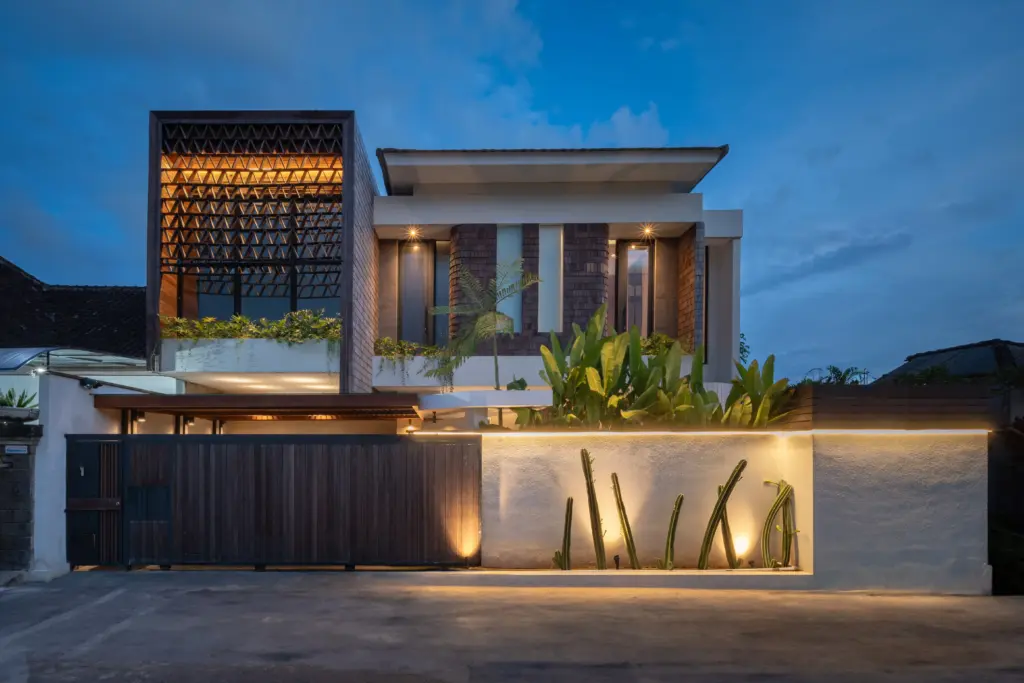
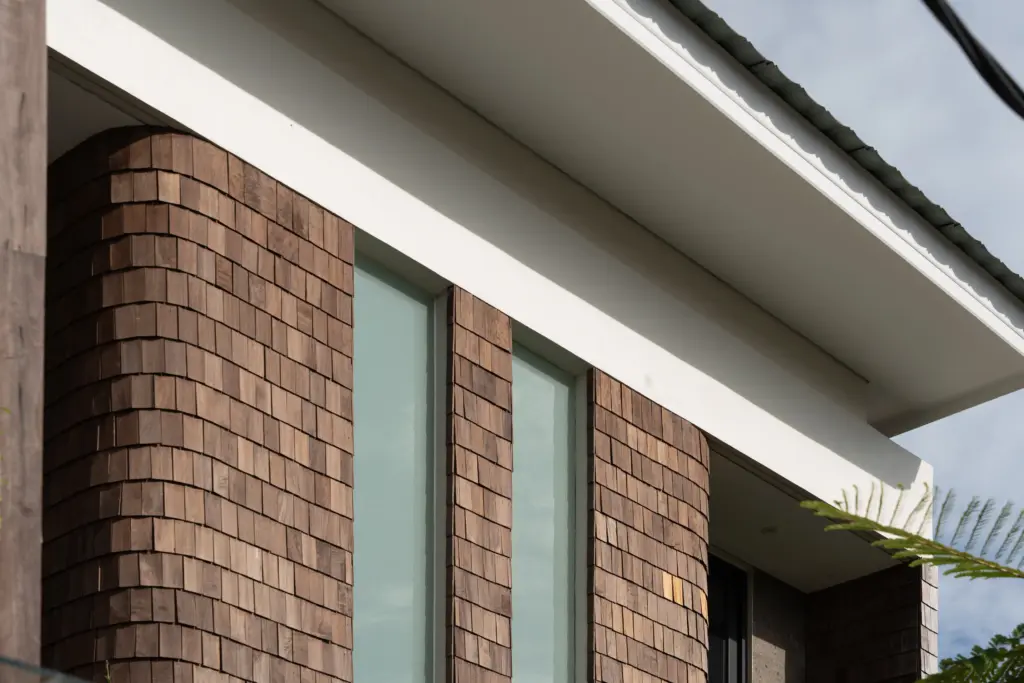
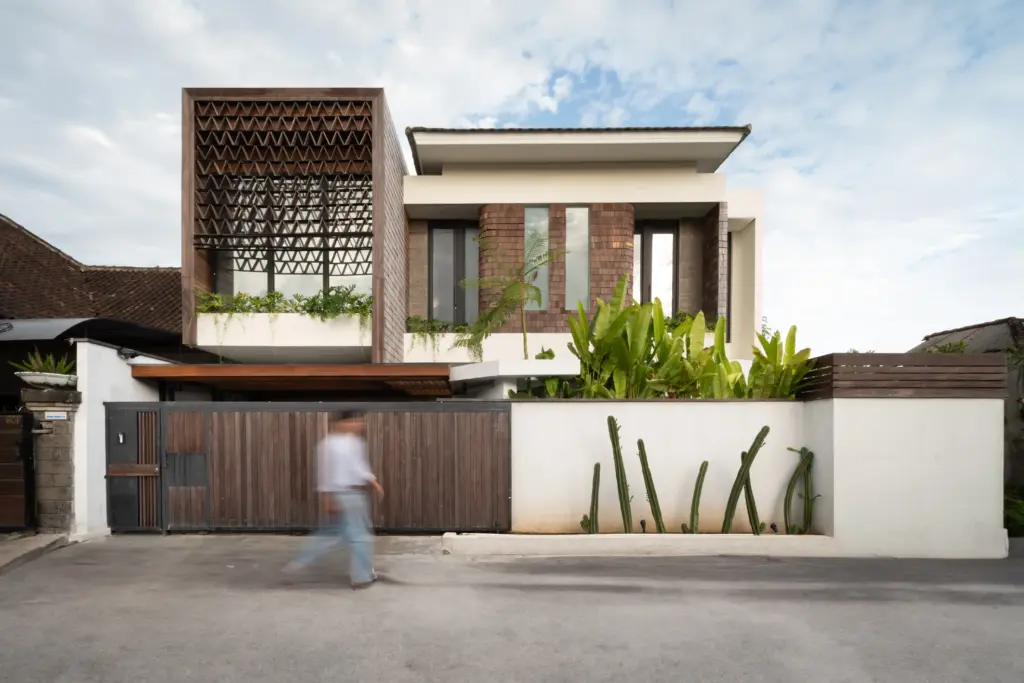
At Krea House in Sanur, Ulin Sirap—a material more commonly associated with traditional roofing—is used to clad the entire building exterior. The decision is not primarily aesthetic. It is grounded in the material's own performance characteristics.
Why Ulin works on a tropical exterior
Ulin is one of the densest hardwoods produced in Indonesia. That density is what gives it natural resistance to termites without chemical treatment. In a climate as humid and warm as Bali's, where many imported materials begin to degrade within their first few years, Ulin remains stable.
Thermally, Ulin is also well-suited. It does not absorb heat excessively, which means the exterior wall does not become a source of radiant heat into the rooms during the afternoon. For a villa that also relies on passive cooling, this is a relevant quality.
A patina that grows, not a deterioration that arrives
When first installed, Ulin is a warm reddish-brown. That colour shifts over time: prolonged weather exposure gradually moves the surface toward a quiet silver-grey. That process is not degradation. It is maturation.
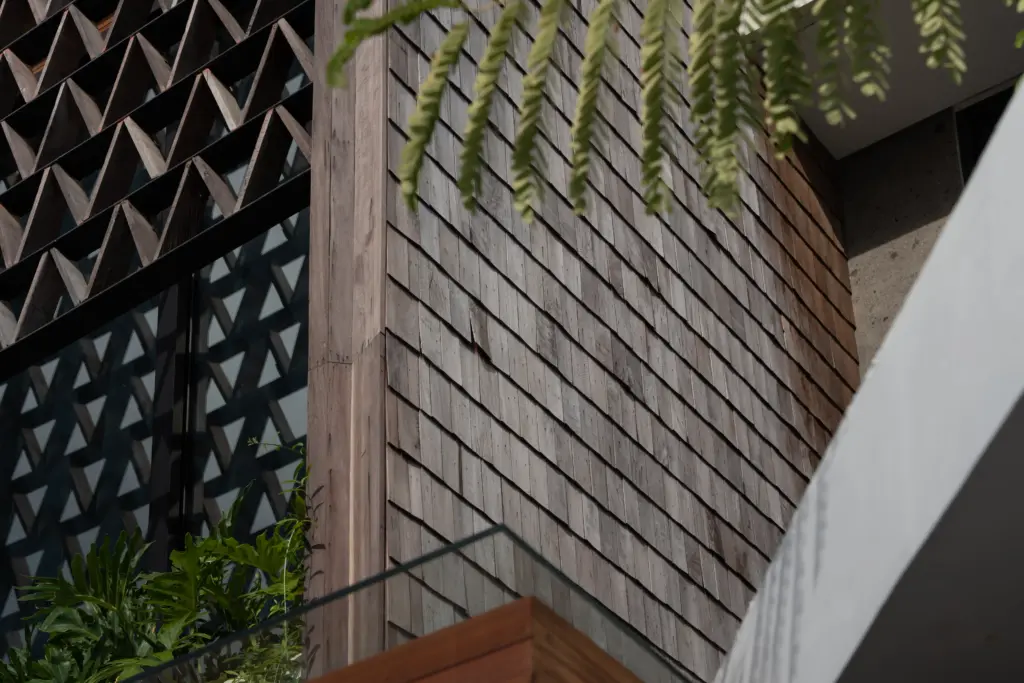
The grey patina that develops on aged Ulin has a visual depth that no paint or synthetic finish can replicate. The facade of Krea House is designed with the understanding that its best appearance may not be on the day of completion.
In a context where many Bali villas choose materials that look perfect at handover but fade quickly, this approach reflects a different priority: building for the long term, not for the first photograph.
A roofing material reinterpreted as a building skin
Using Ulin Sirap as a facade is an unconventional decision. Traditionally, sirap is a roofing material—lightweight, layered, and water-resistant. At Krea House, the same logic is applied to the wall: layer upon layer of Ulin forms an exterior skin with texture and depth that a flat panel system cannot produce.
The result is a building that feels rooted in local material tradition while being expressed in a fully contemporary architectural context.