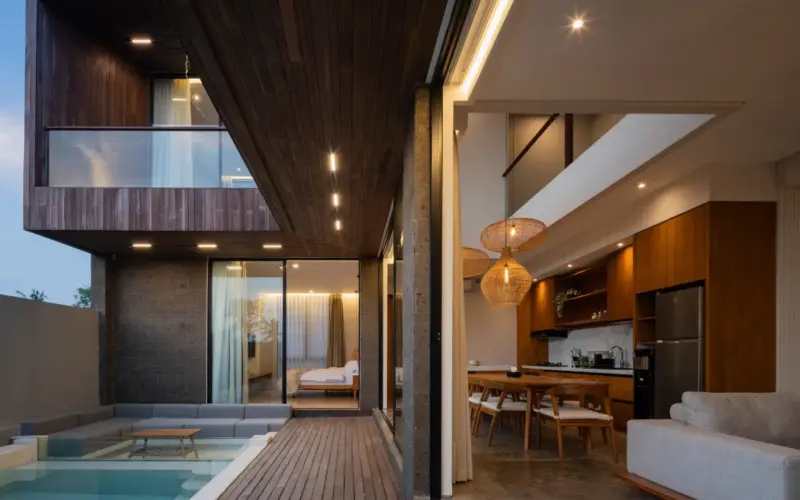
Jade House is a private residence designed for a French family who have been living in Indonesia for several years. While they have built a life abroad, distance often becomes more present when their daughter goes to school—small daily moments that quietly awaken a longing for their roots in France. Rather than responding with literal symbols, the house was conceived as a tribute to cherished memories. It stands as proof that architecture, when guided by human touch, can hold emotion, nostalgia, and personal history within its walls.
At the core of Jade House lies a simple yet profound philosophy: the value of reminiscing childhood memories. The home becomes a playground—not only for a child, but for the entire family. It recalls a time when spaces were open to imagination, when movement was free, and when joy was found in the simplest gestures. Through this approach, Jade House resonates with nostalgia and personal significance, creating a space that feels both comforting and deeply familiar.
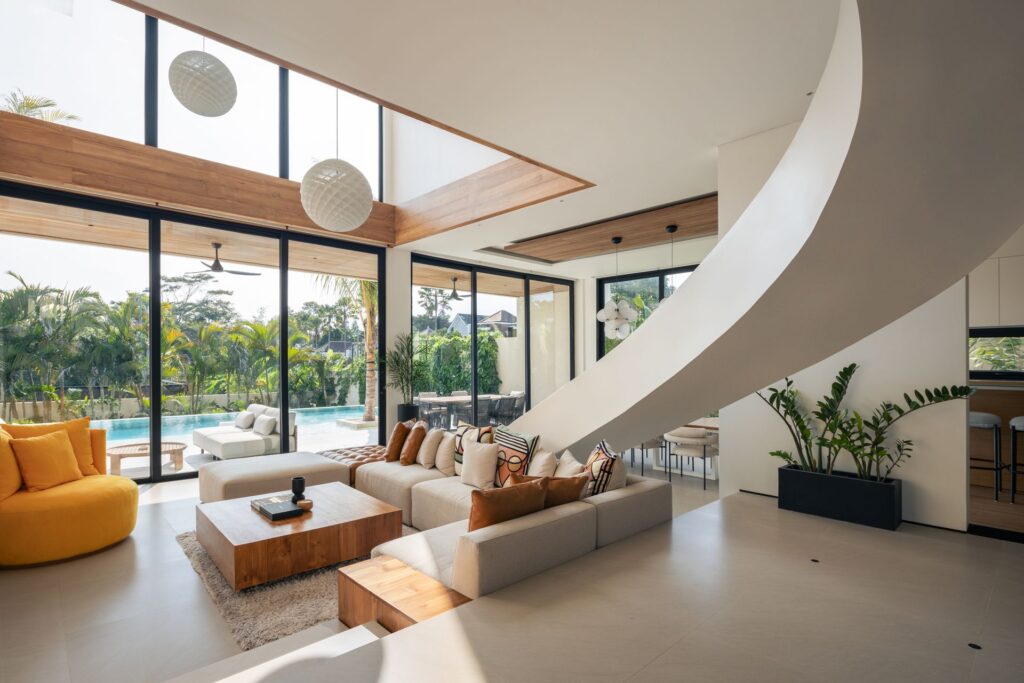
This idea is most vividly brought to life in the living area. Instead of treating it as a formal gathering room, the space is shaped as an interactive landscape. A slide connects two levels, inviting both parents and child to engage with the house in a playful way. It transforms circulation into experience. It reflects the family’s openness, warmth, and shared love for togetherness.
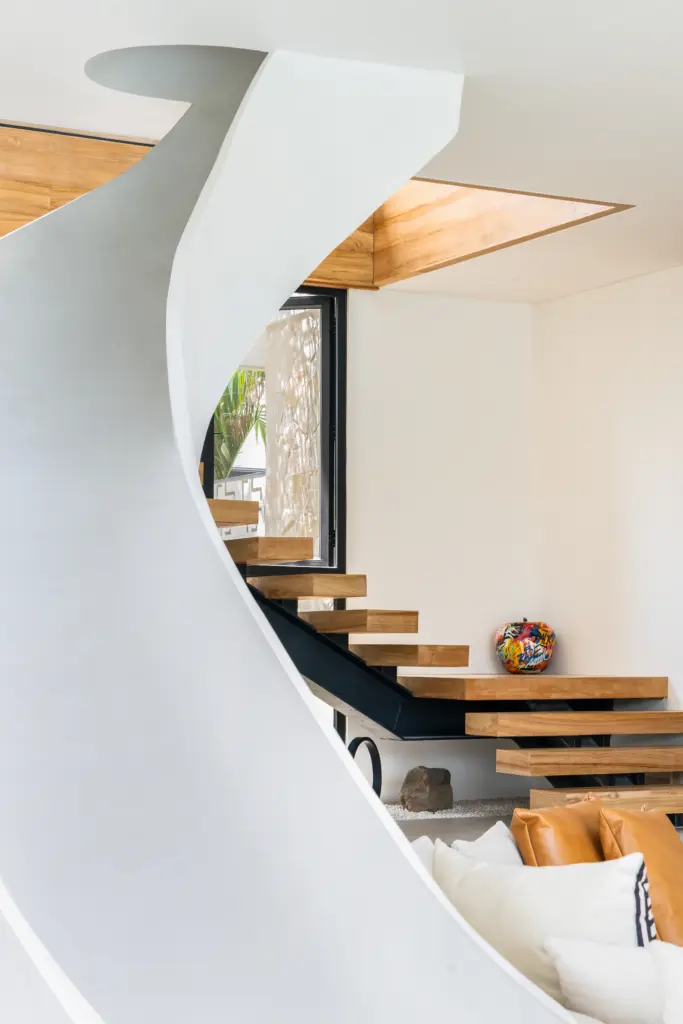
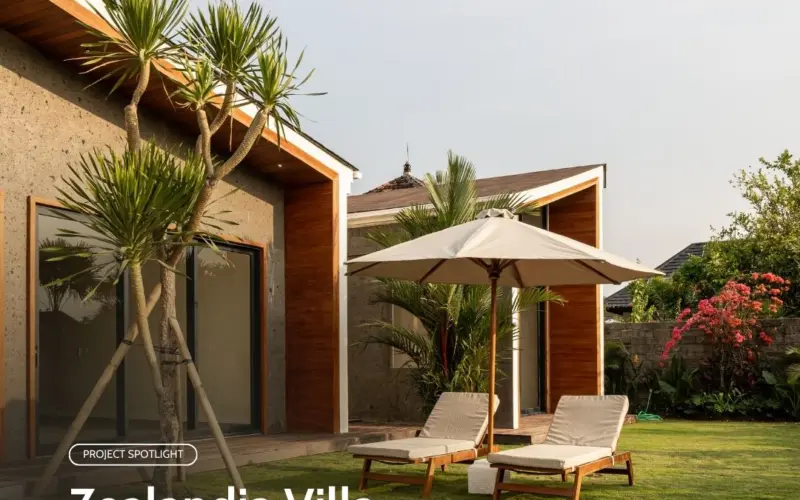
The living area flows seamlessly into the backyard, separated only by transparent glass boundaries that allow natural light to penetrate deep into the interior. This visual and physical continuity reinforces the sense of openness. The backyard itself is designed as a haven for fun and bonding. A swimming pool with varying depths accommodates different activities—from relaxed soaking to diving—while a pétanque court pays homage to the family’s French heritage. These elements subtly anchor the house to their cultural identity without overwhelming the overall design language.
The house is deeply connected to the family’s personalities, habits, and hobbies. Every space is shaped through dialogue and understanding, embodying a human-centered design approach. Rather than imposing a rigid aesthetic, the architecture responds to lived experiences. The result is a home that feels intuitive and personal, where memories are not framed on walls but embedded in spatial sequences.
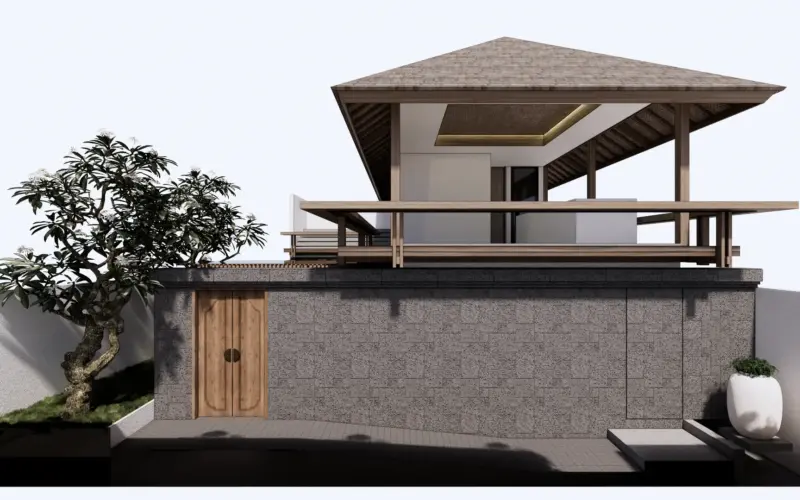
Situated on a site that slopes downward and inclines toward the west, Jade House carefully negotiates its contour. The massing steps along the natural terrain, allowing the house to sit gently within its environment. Light-colored finishes are selected to reduce heat absorption under the tropical sun, while the use of wood is minimized to enhance durability and climatic performance. These material decisions ensure comfort while maintaining a clean, calm atmosphere that complements the emotional narrative of the house.
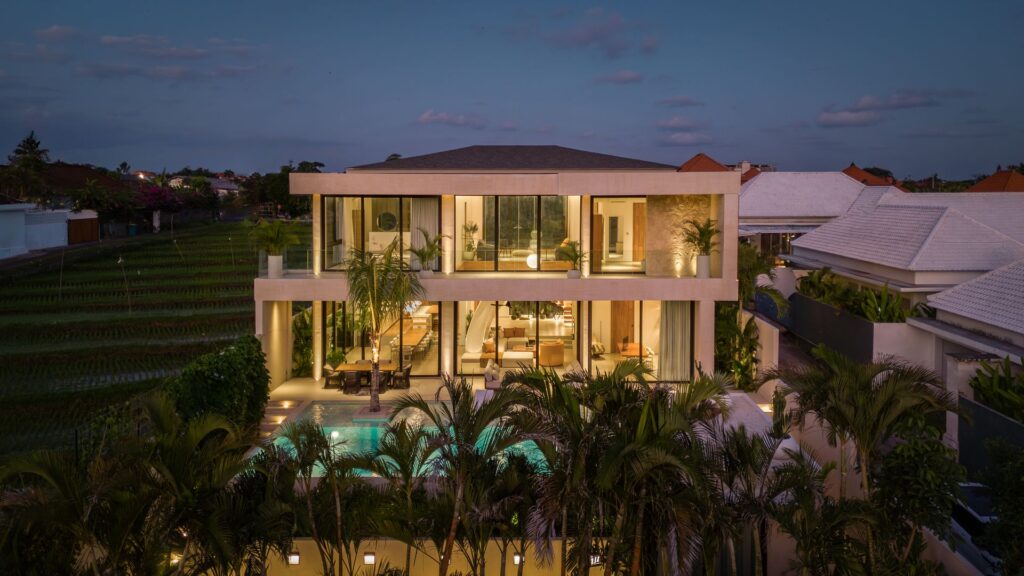
Ultimately, Jade House is more than a residence. It is a reflection of belonging across geographies—a home that bridges Indonesia and France through memory, play, and everyday rituals.